Rocket Homes

october 2020 - current

2 product leads

2 designers

1 ux researcher

10 developers
personas + journeys
One of the most common question I was asked as a UX Researcher for Rocket Homes was Why do some sellers decide to sell without a real estate agent? Though a single set of interviews may answer this on a surface-level, truly understanding an entire segment of user types required well-developed personas and their journeys. Often the effort involved in developing accurate and effective personas often exceeds their practical benefits for a product team. I didn’t want to create personas just for them to be looked at once and then filed away. I wanted to be able to answer these fundamental questions about our users, and I wanted those answers to be loud enough for everyone to hear.
To ensure that the personas were accurate, I took a multifaceted approach to research. I began with scripting user interviews for sixteen For-Sale-By-Owner sellers: 4 First-Time Ever Sellers, 4 “First-Time” Sellers (who had experienced their partner selling a shared home in the past), 4 “First-Time” FSBO Sellers, and 4 Returning FSBO sellers.
As with all of my research initiatives, the interview script was reviewed and approved by each stakeholder. The interviews themselves were scheduled across two weeks, after which started the second phase of the research involving participation from stakeholders: Creating clips from each interview on Usertesting.com. I guided first-time Usertesting.com users on how to create a clip, and what was most helpful in creating clips.
During the interview process, I took detailed notes to facilitate a comprehensive review of the clips provided by participants. I subsequently translated these notes into sticky notes on LucidChart, which served as the foundation for creating an affinity diagram.
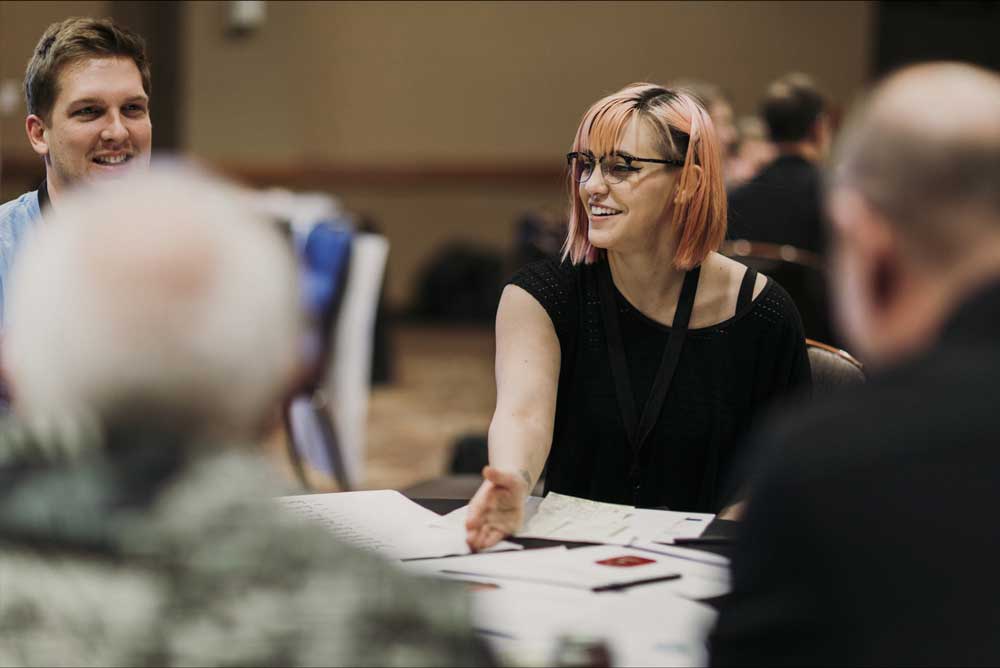
To promote stakeholder engagement, I conducted two workshops where participants organized the sticky-notes across an affinity diagram. This approach not only fostered individual insights and empathy for users but also encouraged discussions among stakeholders regarding their own user experiences. By actively involving stakeholders in the research process, we effectively addressed one of the primary challenges in UX research: fostering a lasting connection to the findings.
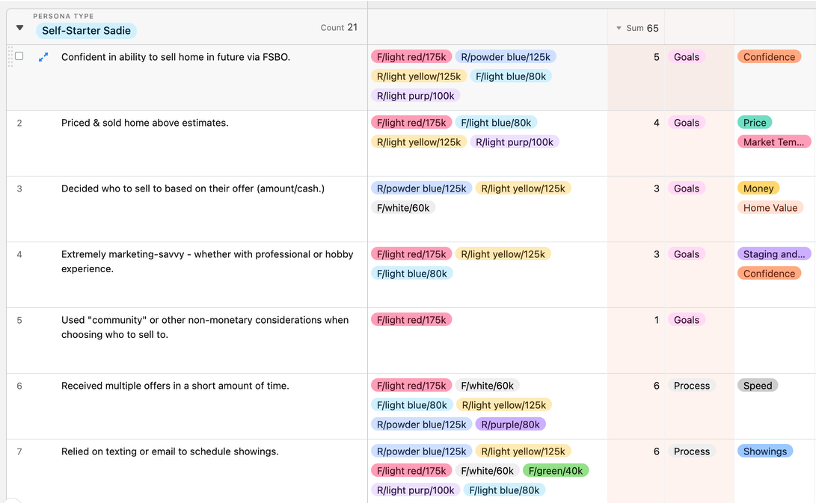
As the UX expert, I took insights from the affinity diagram and organized the data in multiple types of views in Airtable. Considering the sometimes cursory nature of group activities, I reviewed the interviews and clips for each drafted persona, ensuring that all data was captured.
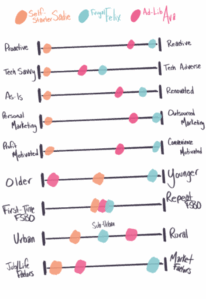
Then I mapped out demographic and personality differences among emerging user types with a simple hand drawn chart in Procreate. This helped me confirm that there were clear differences between each persona.


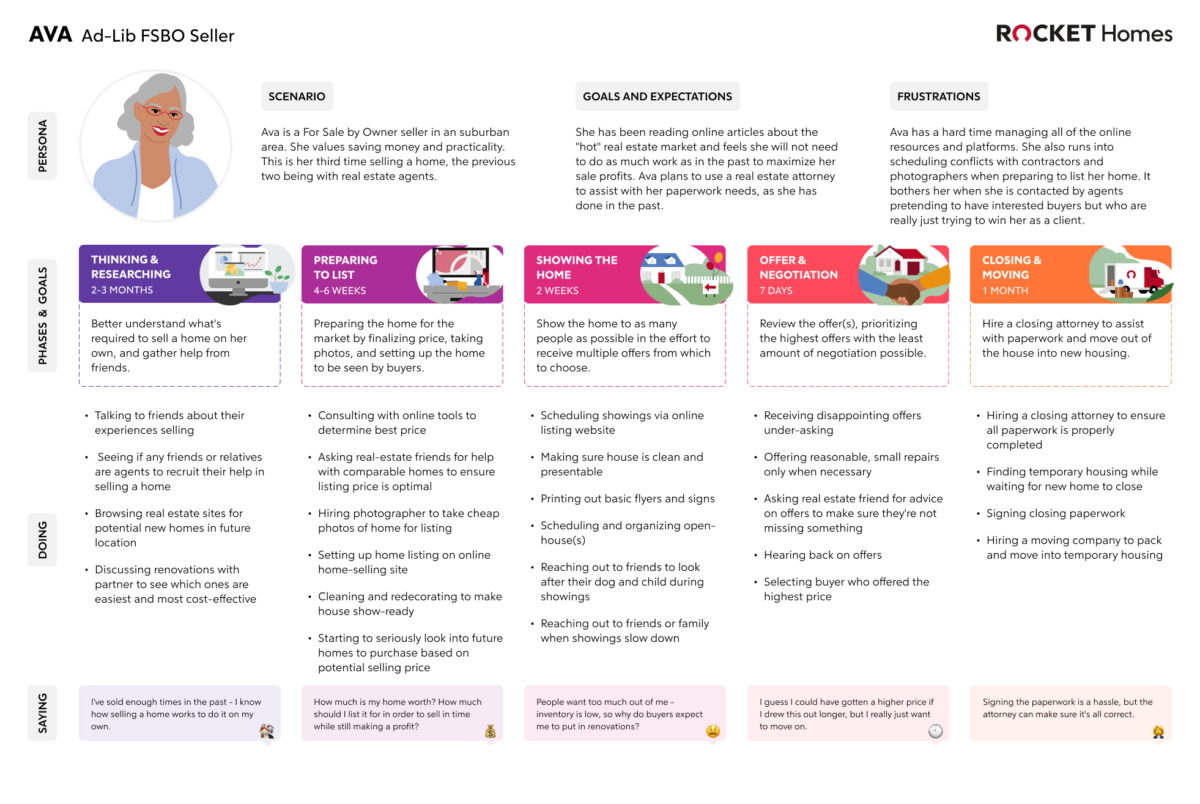
Finally, I proposed 3 personas to the team, all with their own wants and challenges:


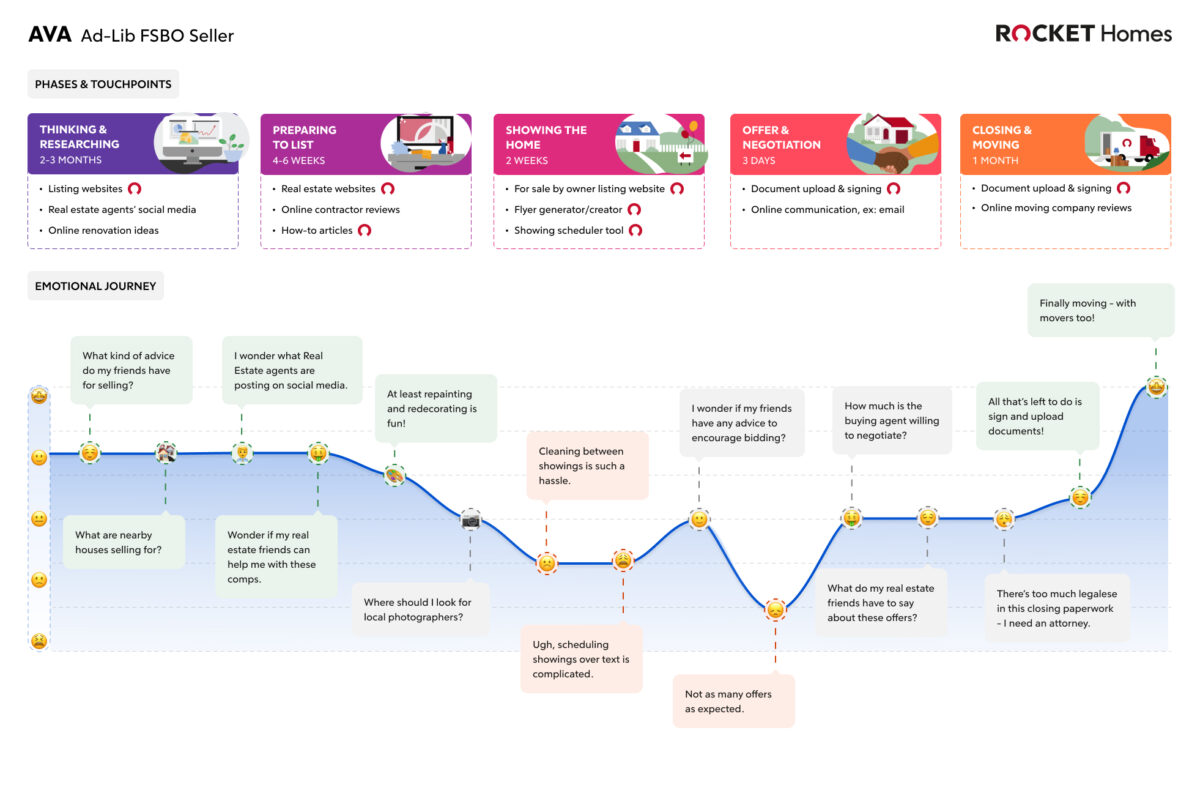
My interviews had provided a wealth of data-points to craft a journey unique to each persona spread across 5 main stages: Thinking & Researching, Preparing to List, Showing the Home, Offer & Negotiation, and finally Closing & Moving. Based off the data already gathered and analyzed, I created an outline of each aspect of the persona and journey. Overall, this included:
- Scenario
- Goals and Expectations
- Frustrations
- Phases & Goals
- “Doing”
- “Saying”
- Touchpoints
- Emotional Journey
Together with a partner in design, this ultimately created a set of three “Personeys,” one of which is displayed here.